Men’s Health Week is often framed around awareness. Encouraging people to talk more, check in more, book appointments, take things seriously.
All important. But it misses something fundamental.
Health isn’t just personal. It’s environmental.
And for most of us, that environment is the workplace.
We spend a significant portion of our lives at work, and the spaces we occupy every day quietly shape how we feel, move, think and behave. So if we’re serious about improving health outcomes, we need to look beyond campaigns and start looking at design.
The Impact Of Workplace Design On Health And Wellbeing
The physical workplace has a measurable impact on both physical and mental wellbeing.
Noise, lighting, temperature, air quality and layout all influence how people experience their day, affecting everything from concentration to stress levels.
When these factors are poorly considered, the effects are just as tangible. Discomfort, fatigue and reduced engagement aren’t abstract ideas, they’re daily realities for many employees.
For businesses, that translates into more than just wellbeing concerns. It affects performance, productivity and long-term retention.
But for individuals, particularly those less likely to actively seek support, it can be the difference between coping and struggling.
Designing For Real Behaviour, Not Ideal Behaviour
One of the challenges with workplace wellbeing is that it often relies on people choosing to engage.
Attend the session. Join the workshop. Start the conversation.
But behaviour doesn’t always follow intention.
Men, in particular, are often less likely to seek help or openly talk about health concerns in traditional workplace settings.
That’s where design becomes critical.
Instead of expecting behaviour to change first, the space can do some of the work.
As David Seller, Group Design Director, explains:
“When workplaces are designed around people, they become places where wellbeing, performance and meaningful connections can flourish. Creating healthy environments that support movement, collaboration and balance helps people feel connected, supported and empowered.”
This is where design moves beyond aesthetics. It becomes a tool for shaping behaviour, often in ways people don’t consciously notice.
- Layouts that encourage movement rather than long periods of sitting
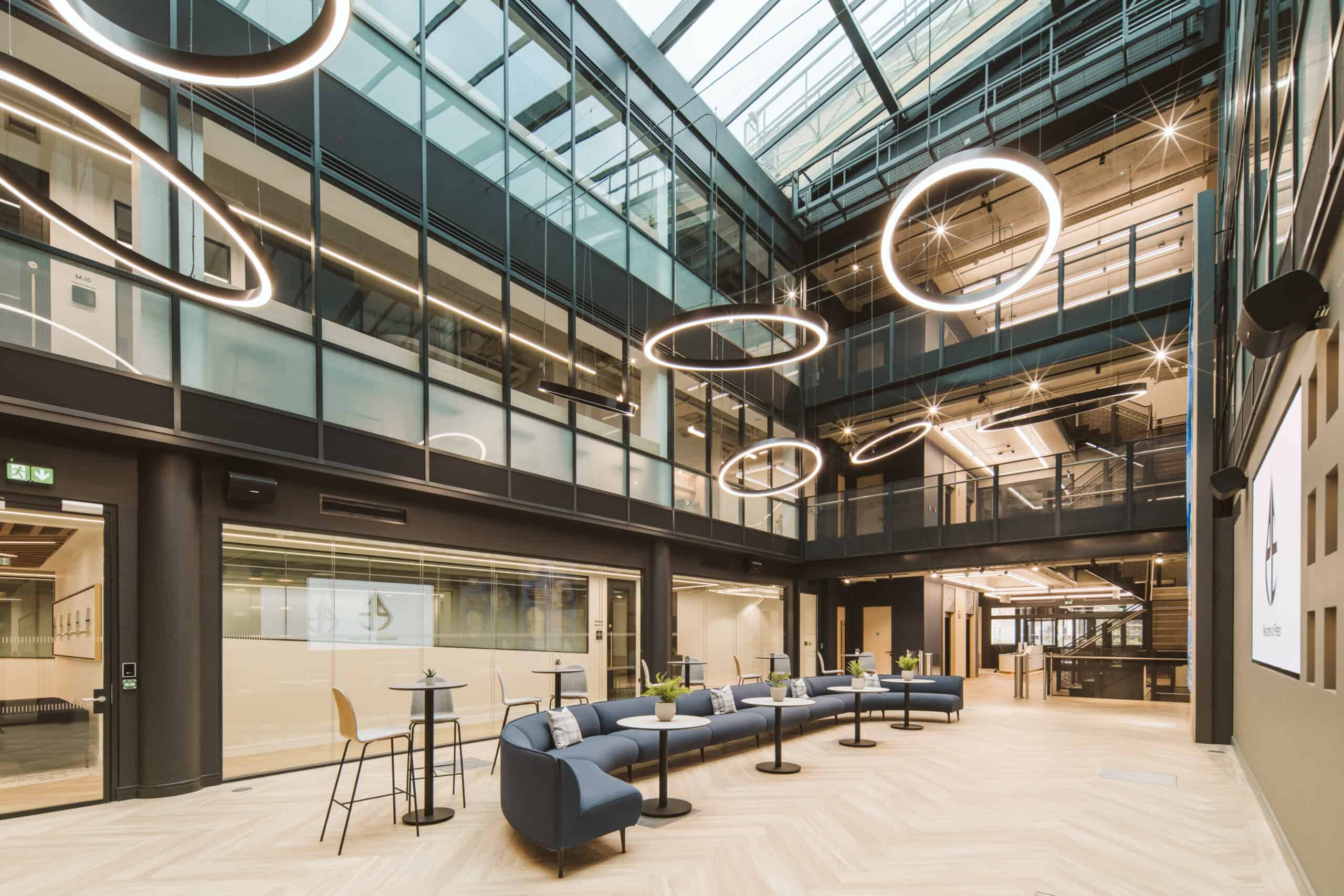
- Informal breakout areas that support connection without forcing conversation
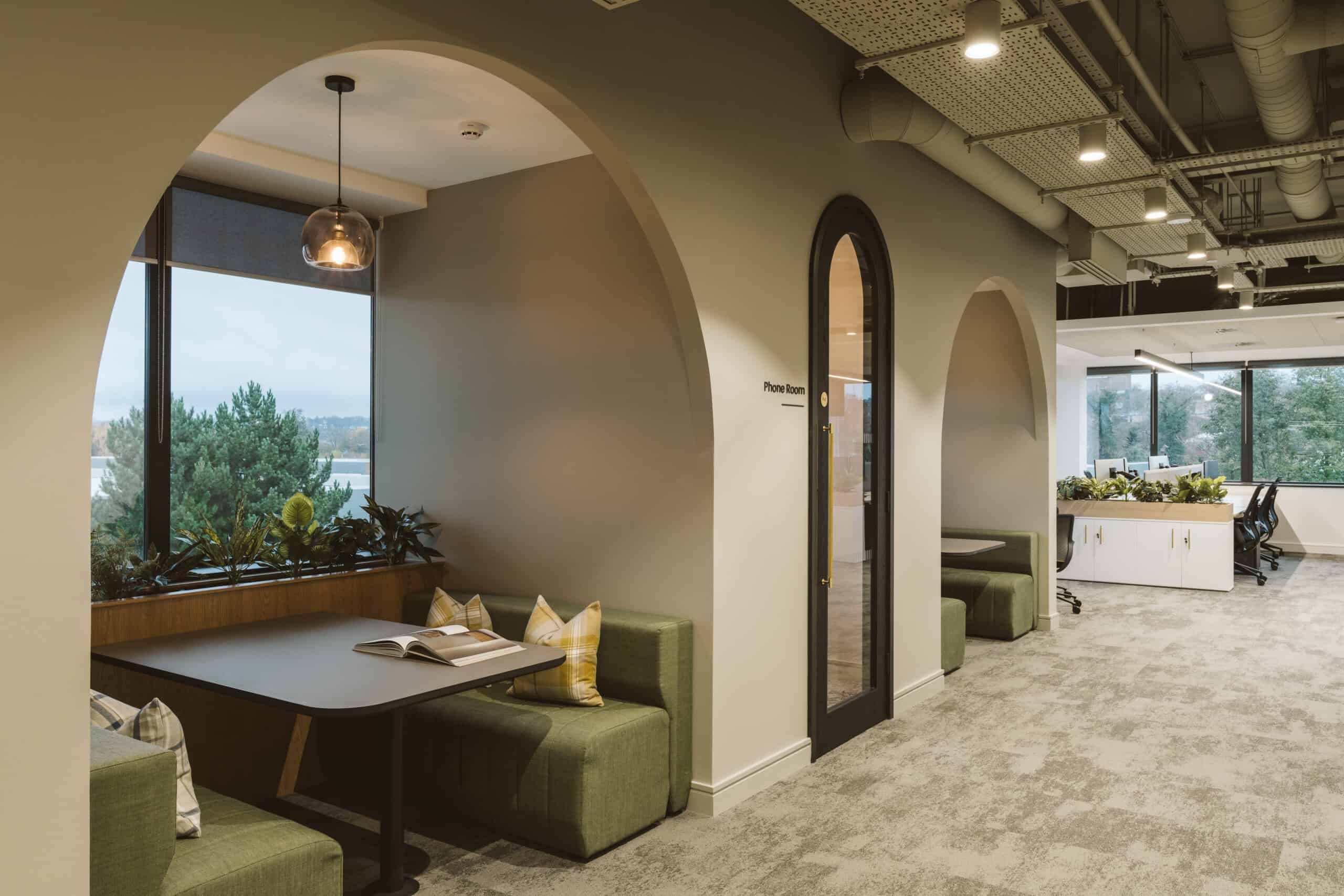
- Quiet spaces that allow people to step away without explanation
- Environments that feel calm, comfortable and psychologically safe
These aren’t ‘features’. They’re subtle interventions that shape behaviour over time.
The Invisible Support System
The most effective support in a workplace isn’t always visible.
It’s built into the everyday experience of being there.
Ergonomic furniture reduces physical strain without being noticed.
Natural light improves mood and energy without needing explanation.
Access to movement helps combat sedentary lifestyles without being mandated.
Individually, these might seem small. Collectively, they create environments that support people by default.
Research shows that elements like lighting, furniture, layout and temperature all play a role in influencing wellbeing, engagement and overall experience at work.
And when these elements are prioritised, the benefits are clear. Improved wellbeing, higher engagement and stronger performance are all linked to better-designed workplaces.
This is where design shifts from being aesthetic to being strategic.
From Perks To Principles
Workplace wellbeing has traditionally been delivered through add-ons.
Gym memberships. Fruit bowls. Awareness weeks.
While well intended, they often sit alongside environments that don’t support healthy behaviours day to day.
Today, expectations are different.
Wellbeing is no longer something that happens occasionally. It’s something that needs to be embedded.
That means designing:
- Spaces that encourage movement as part of the working day
- Environments that reduce sensory overload and support focus
- Workplaces that offer choice, control and comfort
- Layouts that reflect how people actually work, not how we assume they will
It’s not about doing more. It’s about designing better.
Supporting Men Specifically
Men’s Health Week highlights a well documented challenge. Many men are less likely to speak up, seek help or engage with traditional health initiatives.
That puts more pressure on the environment to do the heavy lifting.
Workplaces can’t rely solely on conversation to drive change. They need to create conditions where people feel supported, whether they explicitly ask for it or not.
Design plays a key role in that.
Spaces that promote informal interaction can help build trust over time.
Environments that reduce stress and physical discomfort can prevent issues escalating.
Layouts that offer autonomy and control can improve both mental resilience and day-to-day experience.
Importantly, they remove some of the barriers that stop people engaging in the first place.
Designing For Health Is Designing For People
At its core, this isn’t just about men’s health.
It’s about recognising that the workplace is one of the most powerful tools organisations have to influence wellbeing.
When design is approached with people in mind, not just processes, the results go beyond aesthetics.
Health improves. Engagement improves. Performance improves.
And perhaps most importantly, the workplace becomes somewhere that actively supports the people using it, rather than something they need to work around.
A Shift In Responsibility
Men’s Health Week is a timely reminder that health isn’t something that sits entirely with the individual.
Organisations play a role. Leaders play a role. And the spaces we create play a role.
Designing for health isn’t an added extra. It’s part of a responsible workplace.
If we want to see meaningful change, we need to move beyond awareness and start embedding health into the environments we create every day.
Because the best support doesn’t always come from what we say.
Often, it comes from the spaces we build.